From the iconic Telstar 1970 to the futuristic Trionda 2026 — every Adidas official match ball tells a story of innovation, culture, and footballing magic. Here are all 15 World Cup balls in Adidas's legendary partnership with FIFA.
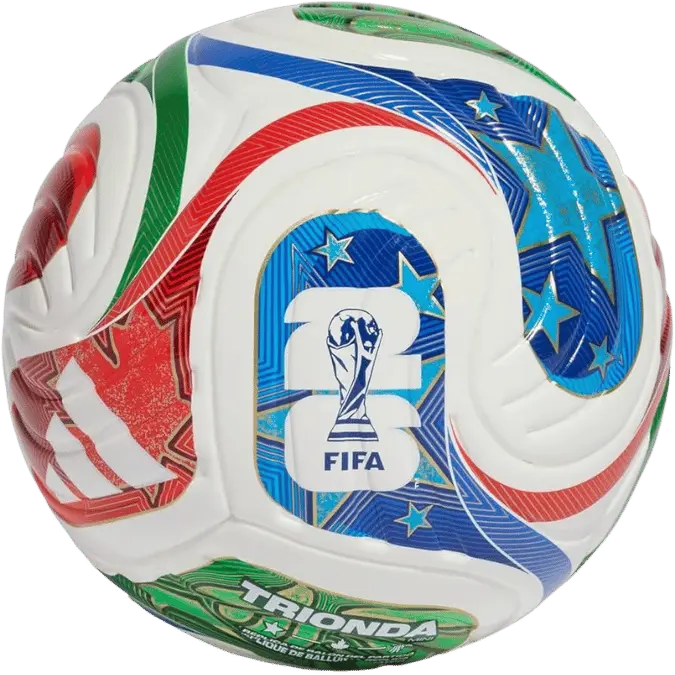
The Adidas Trionda is the official match ball of the 2026 FIFA World Cup — the biggest tournament in football history, hosted across Canada, Mexico, and the United States. Its name fuses "Tri" (three) and "Onda" (Spanish for wave), forming the Triple Wave — a tribute to the three host nations united by one game.
Crafted with just four thermally bonded panels — the fewest ever used in a World Cup ball — the Trionda redefines aerodynamic precision. Hidden inside one panel is a 500Hz Connected Ball Technology chip that feeds real-time data directly to VAR officials.
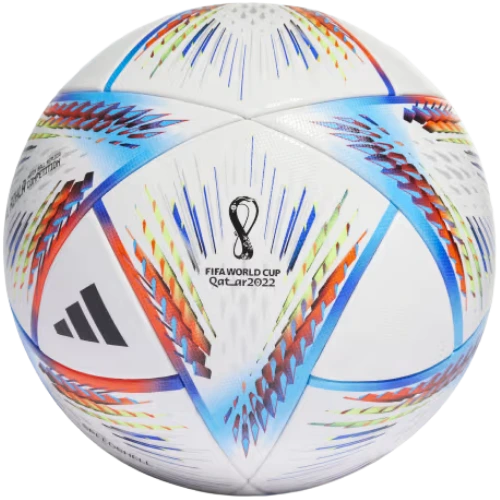
The Adidas Al Rihla was the official match ball of the 2022 FIFA World Cup in Qatar — the first World Cup ever held in the Middle East. Its name means "The Journey" in Arabic, drawing inspiration from Qatari culture, iconic boats (dhows), and the dazzling architecture of the host country.
Al Rihla made history as the first World Cup ball designed to travel faster in flight, powered by Adidas's groundbreaking Connected Ball Technology with a 500Hz IMU motion sensor suspended at its core.
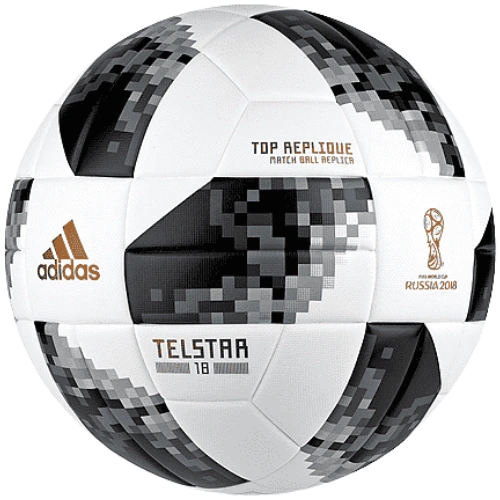
The Adidas Telstar 18 was the official match ball of the 2018 FIFA World Cup in Russia — a modern reimagining of the legendary Telstar 1970. Its design fused retro heritage with cutting-edge technology for a new generation of fans.
Built with just six textured panels for smoother, more consistent flight, it became the first World Cup ball with an embedded NFC chip, allowing fans to interact with the ball through their smartphones.
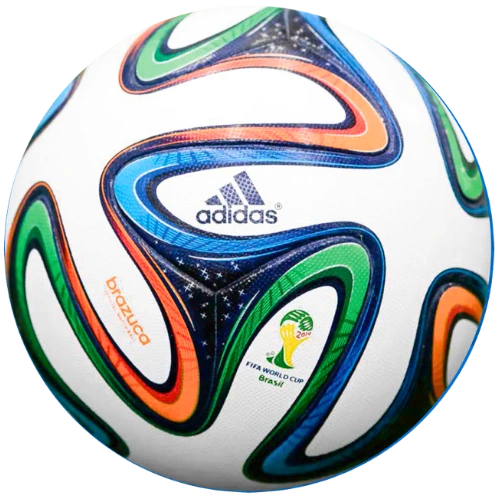
The Adidas Brazuca was the official match ball of the 2014 FIFA World Cup in Brazil. Its name — chosen by over one million Brazilian fans in a public vote — is informal slang celebrating Brazilian pride, emotion, and goodwill toward all things football.
Featuring just six identical polyurethane panels, the Brazuca was praised by players for its consistent flight and grip. Its vibrant ribbon-style design symbolized the colorful traditional bracelets worn across Brazil.
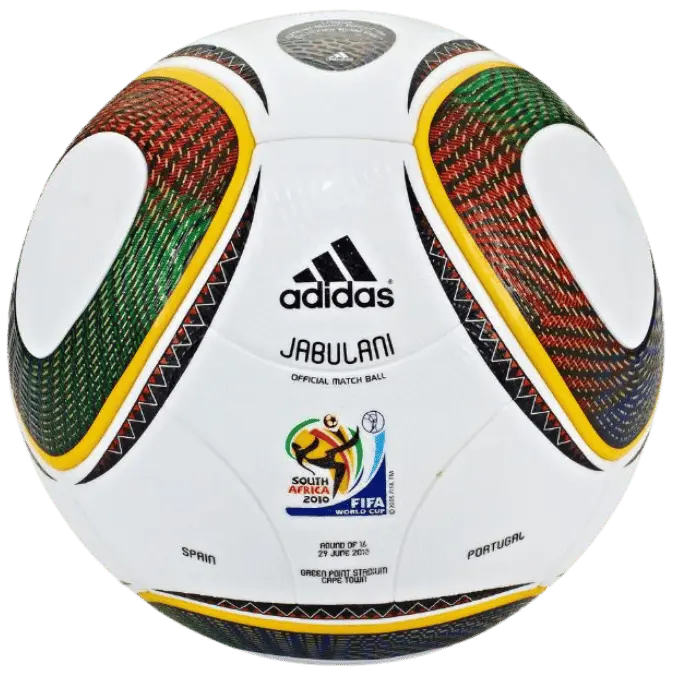
The Adidas Jabulani was the official match ball of the 2010 FIFA World Cup in South Africa — the first World Cup ever held on the African continent. Its name means "to celebrate" in Zulu, honoring the spirit of the host nation.
Built with just eight 3D thermally bonded panels, Jabulani had the fewest panels of any World Cup ball at the time. Its 11 colors represented the 11 players on a team, 11 official languages of South Africa, and 11 tribes that make up the rainbow nation.
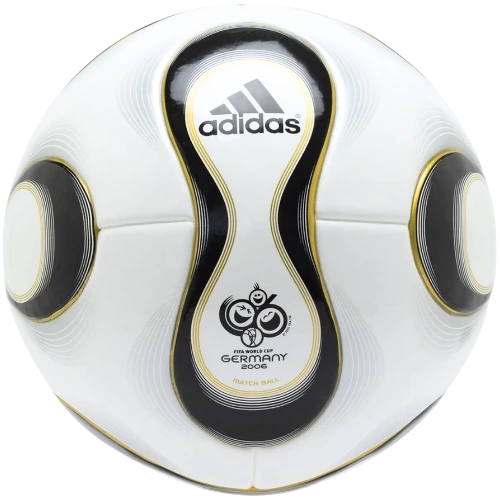
The Adidas +Teamgeist was the official match ball of the 2006 FIFA World Cup in Germany. Its name means "team spirit" in German, reflecting the values of unity, passion, and collective effort.
A revolutionary design featuring just 14 thermally bonded panels — far fewer than the traditional 32 — gave it a near-perfect spherical shape and unprecedented surface smoothness.
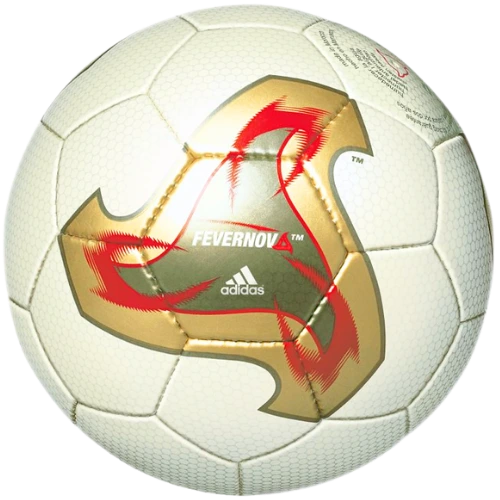
The Adidas Fevernova was the official match ball of the 2002 FIFA World Cup in South Korea and Japan — the first World Cup held in Asia and co-hosted by two nations.
Breaking from the classic Tango design used for decades, Fevernova featured a bold golden triangle pattern inspired by Asian culture and traditional folklore, symbolizing the energy and passion of the tournament.
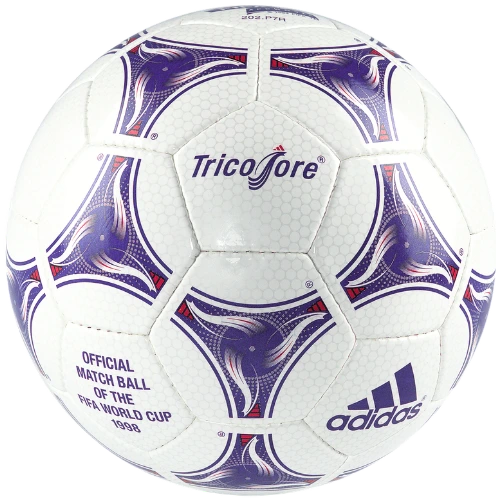
The Adidas Tricolore was the official match ball of the 1998 FIFA World Cup in France. Its name refers to the three colors of the French flag — blue, white, and red — proudly displayed across its bold design.
It was the first multicolored World Cup ball in history, breaking decades of black-and-white tradition.
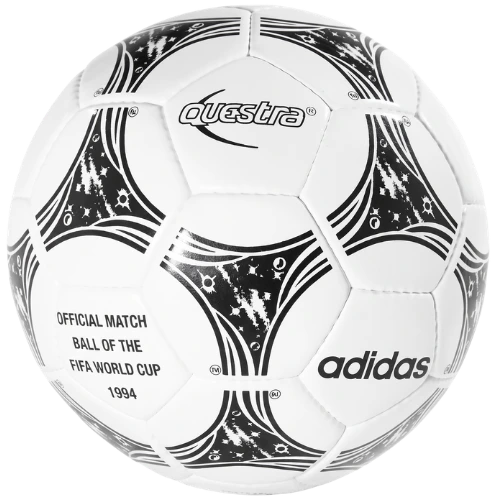
The Adidas Questra was the official match ball of the 1994 FIFA World Cup in the United States. Its name — Latin for "the quest for the stars" — was inspired by America's high-tech, space-age culture and exploration legacy.
Featuring a star-shaped pattern and made with a polystyrene foam layer, Questra delivered softer touch and quicker reaction than any previous World Cup ball.
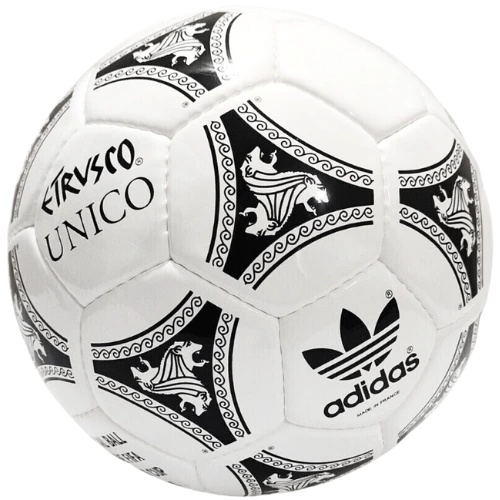
The Adidas Etrusco Unico was the official match ball of the 1990 FIFA World Cup in Italy. Its name pays tribute to Italy's ancient Etruscan civilization, and its design featured three Etruscan lion heads on each of the 20 triads.
It was the first World Cup ball with an internal layer of black polyurethane foam, making it fully waterproof and faster than any previous ball.
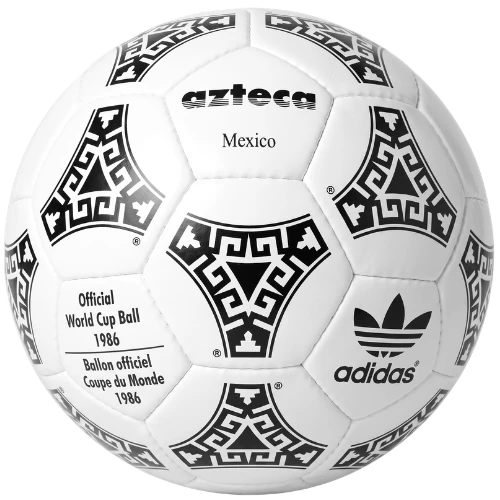
The Adidas Azteca was the official match ball of the 1986 FIFA World Cup in Mexico. Its design paid tribute to the ancient Aztec civilization, with intricate patterns and motifs inspired by Mexican murals and architecture.
It was the first World Cup ball made entirely from synthetic materials — a massive innovation that improved water resistance, durability, and performance on grass.
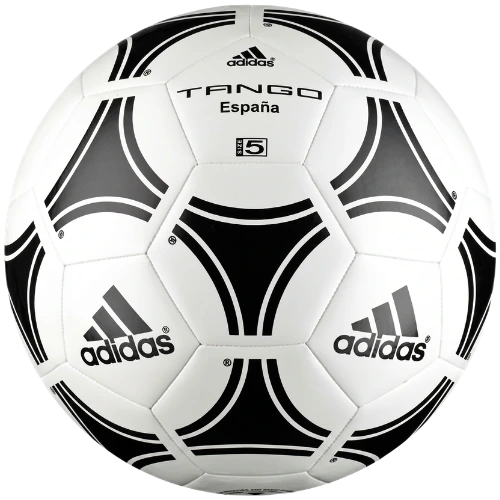
The Adidas Tango España was the official match ball of the 1982 FIFA World Cup in Spain. A refinement of the iconic Tango design, it featured rubber-inlaid seams for improved water resistance.
It was the last genuine leather World Cup ball — the end of an era before synthetic materials took over.
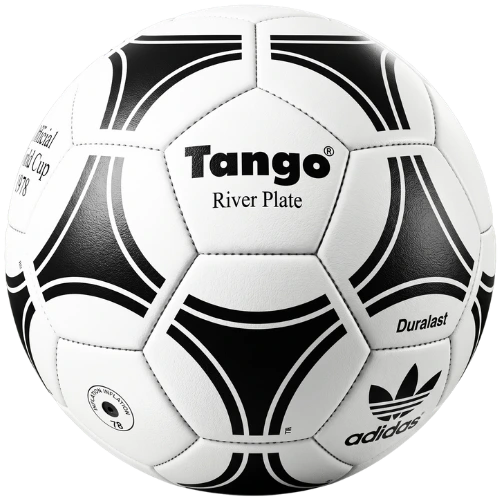
The Adidas Tango Riverplate was the official match ball of the 1978 FIFA World Cup in Argentina. Named after the iconic Argentine dance and the Río de la Plata, it introduced the legendary Tango design — 20 triads creating the illusion of 12 identical circles.
The Tango pattern would go on to become the most iconic football design in history, used in some form for every World Cup until 2002.
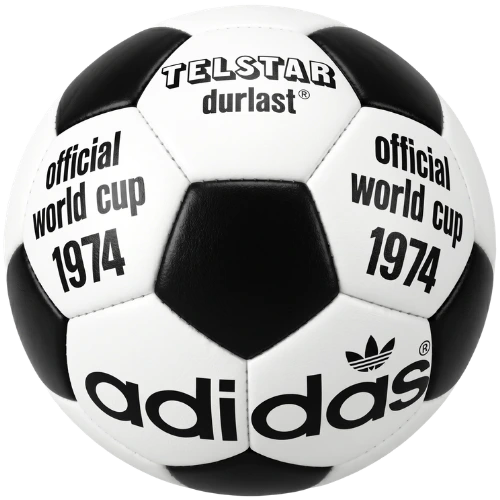
The Adidas Telstar Durlast was the official match ball of the 1974 FIFA World Cup in West Germany. An upgraded version of the original 1970 Telstar, it featured a polyurethane coating called "Durlast" for improved water resistance and durability.
An all-white version was also used at this tournament, marking a subtle break from the iconic black-and-white pattern.
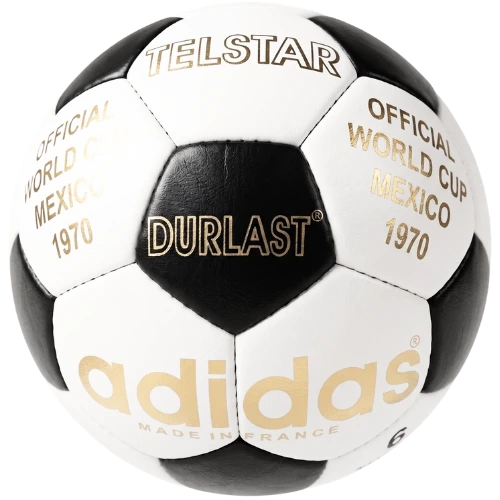
The Adidas Telstar was the official match ball of the 1970 FIFA World Cup in Mexico — and the first-ever Adidas World Cup ball, launching the legendary partnership between Adidas and FIFA that continues to this day.
Its name — short for "Television Star" — was inspired by the Telstar communication satellite. The iconic black-and-white design with 32 panels (12 black pentagons and 20 white hexagons) was specifically created to be more visible on black-and-white television broadcasts.

Your ultimate guide to the FIFA World Cup 2026 official match ball. Ball history, gear, news, and shop.
Built by football fans, for football fans — celebrating every Adidas World Cup ball from Telstar 1970 to Trionda 2026.
